

The Clothes Chair Isn’t Your Problem. It’s Your Home Trying to Solve One.
A chair covered in clothes beside the bed isn’t necessarily clutter. Sometimes it’s a clue.
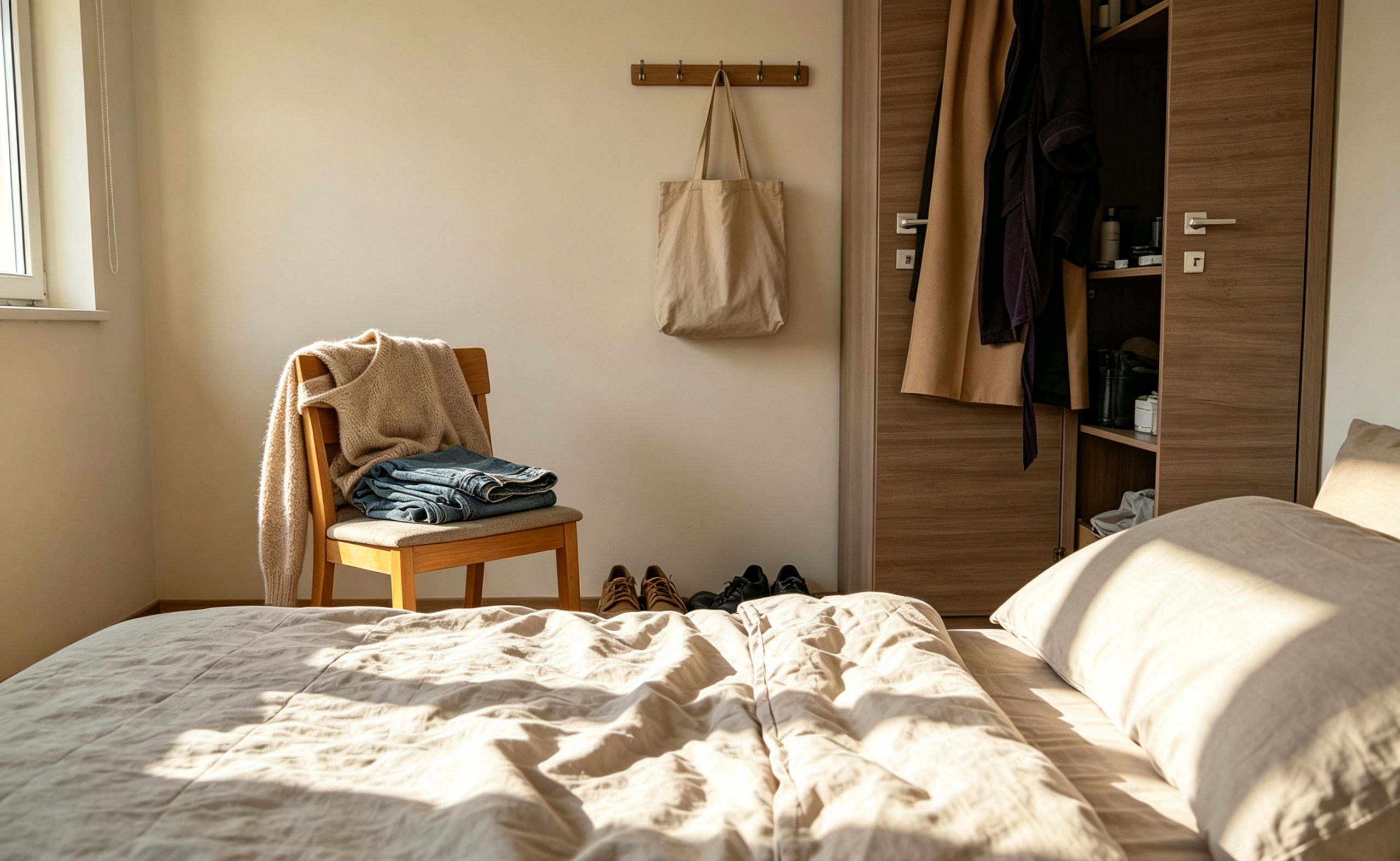
Everyone knows the clothes chair. It might be a dining chair in the corner of the bedroom. A bench at the foot of the bed. A treadmill that no longer functions as exercise equipment. Somehow, over time, it becomes a place for clothes that are not quite clean, not quite dirty, and not quite ready to go back into the wardrobe.
Most people see it as a bad habit. Something to fix. Something to become more disciplined about. But I think the clothes chair is doing something else entirely. I think it’s trying to solve a problem.
We tend to assume clutter is always the problem
When people feel frustrated with their homes, they often assume they own too much. The advice that follows is familiar: declutter, buy storage, get better organisers, put things away immediately. And sometimes that is exactly what a space needs.
Some objects really are things we no longer want, use, or need. But many of the things we call clutter are not unwanted possessions. They are evidence that our homes are adapting to the way we actually live.
The clothes chair exists because something about the existing system isn’t supporting everyday life. The question isn’t why the clothes ended up there. The question is why that chair became the easiest answer.
It is not clutter. It is adaptation.
Not all clutter is the same
Over time, I’ve noticed that what people describe as clutter often falls into a few different categories.
Things you don’t actually want
This is the kind of clutter most people think about. Items that no longer fit your life. Things you keep out of guilt, habit, or because making decisions feels exhausting These are often best removed entirely.
Less stuff really can make a home easier to use.
Things that don’t have a useful home
Some objects belong in your life. They simply don’t belong anywhere yet.
Maybe your yoga mat lives in a corner because there isn’t a place that feels natural for it to return to. Maybe your headphones move from table to sofa to bedside because their designated spot is too far away from where you actually use them. The object isn’t the problem. The problem is that it never found a place that matches your behaviour.
Things that have a home, but not an easy one
Sometimes storage already exists. It just asks too much of you. A jacket belongs in the wardrobe, but the wardrobe is in another room. The laundry basket is hidden deep inside a cupboard. Putting something away requires opening doors, moving other objects, or interrupting what you’re doing.
So your home quietly creates a second system. A chair appears. A countertop becomes a holding zone. A corner starts collecting bags.
People often see these as failures. I see them as feedback. Your home is showing you where transitions are difficult.
Things that disappear when they’re hidden
Not everything benefits from being stored out of sight. Some objects become easier to use when they remain visible. A guitar on a stand gets played more often than a guitar hidden inside a case. A sketchbook left on a shelf is more likely to be opened than one buried in a drawer.
Visual calm matters. But so does access. Sometimes putting something away makes life easier. Sometimes it makes life disappear.
Things organised around expectation rather than reality
People often create homes for the version of themselves they think they should be. The reading chair nobody sits in. The dining table waiting for dinner parties that rarely happen. The beautifully styled desk used twice a month.
Meanwhile, daily life reorganises itself elsewhere. The laptop migrates to the sofa. The hobby supplies settle on the dining table. The clothes chair appears beside the bed. Eventually the home starts reflecting behaviour rather than intention. And behaviour almost always wins.
The clothes chair is telling you something
The clothes chair isn’t random. It exists because there is a category of clothing that most wardrobes don’t acknowledge. Clothes worn once. Clothes you’ll wear again tomorrow. Clothes that need airing out. Clothes that don’t belong in the laundry basket but don’t feel ready to be folded and put away either. The chair becomes a solution because the home never provided one.
Instead of asking: “How do I stop using the chair?” It can be more useful to ask: “What need is the chair fulfilling?” Maybe you need hooks. Maybe you need open storage. Maybe you need a dedicated place for in-between clothes. Or maybe you simply need permission to recognise that this is part of your routine. Not every system has to look invisible to be successful.
A home works best when it supports reality
Most people try to design around ideals. They imagine how they want to live. Then they become frustrated when their behaviour doesn’t follow the plan. But homes don’t become easier to live in because we become more disciplined. They become easier to live in when they support what already happens.
Good design isn’t about forcing perfect habits. It’s about reducing friction. Making it easier to begin activities, easier to finish them, or easier for things to return.
Because sometimes what looks like clutter isn’t clutter at all. It’s your home trying very hard to adapt to the life happening inside it. The question is whether you want to keep fighting those adaptations, or learn from them.
If this resonates
This is exactly the kind of pattern I look for in my work.
People often assume they need more storage, more furniture, or a bigger apartment. Often, they simply need a home that supports how they already live. I help renters create spaces that fit everyday life using mostly what they already have, without renovation or unnecessary spending.
Book a free 15-minute Home Fit Call
Not ready for that?
Join the mailing list for occasional essays on rental living, small-space design, and the relationship between homes and everyday life.
No spam. Just occasional notes on how people actually live in small spaces.
You might also like: Why small apartments need zones more than storage.