

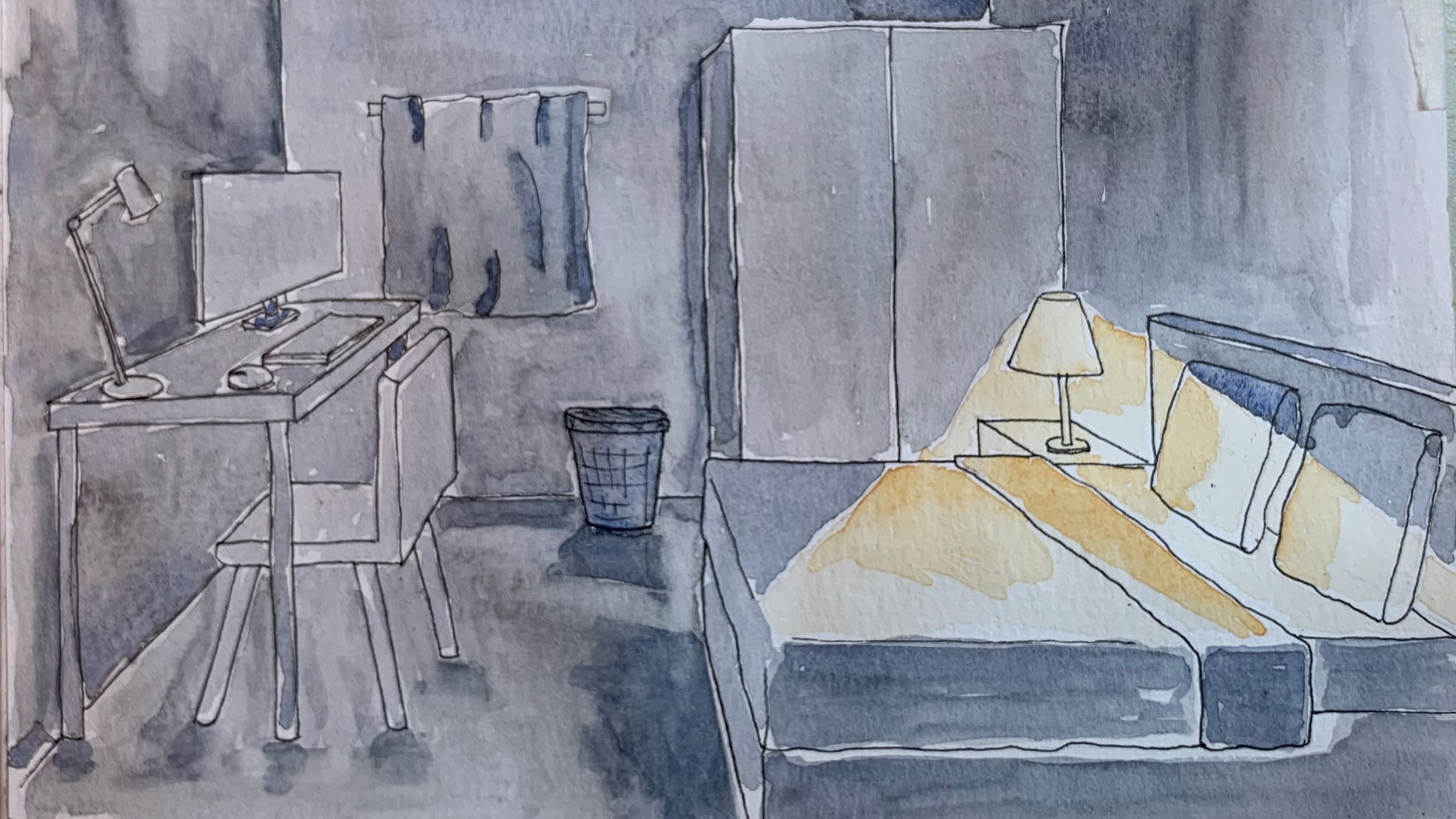
Why Your Bedroom Doesn’t Feel Restful (Even When It Looks Fine)
You clean your room. The laundry is folded. The dishes are done. The floor is vacuumed. Nothing is obviously out of place. And yet, the room still doesn’t feel restful.
Not messy. Not unfinished because you’re missing artwork or a better bed frame. Just… unresolved.
It’s a strange feeling because you’ve done everything you’re supposed to do. But instead of feeling settled, the room still feels like it’s waiting for something.
Most people assume they need new furniture. I think they’re missing something else.
We think rest comes from decoration
People trying to make a bedroom feel more restful often focus on aesthetics. They think softer bedding, warmer lighting, better curtains, plants, artwork, or a nicer bedside lamp will fix it all.
And while those things can help, they don’t necessarily change how the room behaves. You can have beautiful linen sheets, carefully chosen furniture, and soft lighting, and still feel activated when you walk in.
Because rest isn’t only visual. It’s spatial.
It is not decoration. It is the ability for a room to return to a condition associated with rest.
Why bedrooms in rentals struggle to feel restful
For many renters, especially in smaller apartments, bedrooms need to support much more than sleep.
They become:
- workspace
- wardrobe
- dressing room
- storage area
- laundry zone
- reading nook
- entertainment space
Multiple functions are not the problem. The problem is when every function remains present all the time.
Tomorrow’s outfit is hanging in sight. Laundry is waiting to be put away. Work materials remain open on the desk. Packages are sitting in the corner. Surfaces continue to hold active tasks, even when the day is winding down.
The room stays organised around readiness rather than rest.
Does your bed need to be only for sleeping?
Advice about sleep often assumes people have plenty of space.
Use your bed only for sleep. Don’t watch television there. Don’t scroll on your phone. Don’t work from bed.
But in many rental apartments, especially smaller ones, that simply isn’t realistic. Sometimes the bed is the only comfortable place to sit. Sometimes it’s the only place that feels fully yours. Even when there are other options, people don’t always use them.
In shared apartments, a sofa may technically be available, but it can still feel like shared territory. The bed often becomes the place where people retreat, unwind, and spend time without negotiating space with anyone else.
And that’s okay. The goal isn’t to force ideal habits onto a space that doesn’t support them. It’s to understand how the space is already being used and work with those patterns rather than against them.
If the bed is where you naturally relax, the question isn’t how to stop using it. The question is whether the room can still return to a condition that supports rest once other activities are finished.
If your home gives you another place to sit, a sofa, an armchair, a dining chair, even a favourite corner by the window, using that space for some activities can help your bed regain its identity as a place associated with rest. But if your bed is your only place, the goal isn’t strict separation.
The goal is transition. Can the laptop disappear? Can work materials be put away? Can the lighting shift? Can the room stop holding unfinished tasks in view?
In larger homes, rest often comes from separation. In smaller homes, rest comes from sequence.
The question isn’t whether your bed should only ever be used for sleeping. The question is whether your room has a clear resting condition.
Can activities end without remaining visually or physically present? Can the room return to a state that prioritises rest over readiness for the next task?
What a restful room actually feels like
A restful room isn’t necessarily minimal. It isn’t perfectly tidy. It doesn’t mean every object is hidden away. It simply means the room knows how to return to itself. Work can happen there. Laundry can happen there. Getting dressed can happen there. Life can happen there.
But when those activities end, the room has a way of settling back into the condition that supports rest. The bed becomes the dominant object again. The room stops preparing for the next task. And instead becomes a place to recover.
Why this matters even more in rentals
When a home feels temporary, people often postpone creating these systems. They tell themselves, “I’ll figure it out when I move.” or “I’ll buy better furniture later.”
So temporary arrangements quietly become permanent ones. Objects remain in waiting positions. Surfaces stay partially active. Rooms continue to hold traces of tasks that have already ended and tasks that haven’t started yet.
The result isn’t necessarily clutter. It’s a room that never quite settles.
But rest doesn’t begin when you own a home. And it doesn’t begin when you finally have a separate office. It begins when your space makes it easier to stop preparing for what comes next. Because a room doesn’t become restful because it contains a bed. It becomes restful because it consistently returns to a condition that supports rest.
If this resonates
This is exactly the kind of friction I look for in my work. Most people think they need a better bedroom. Often, they simply need a room that knows how to return to itself.
I help renters create homes that support everyday life using mostly what they already have, without renovations or unnecessary spending.
Book a free 15-minute Home Fit Call
Not ready for that?
Join the mailing list for occasional essays on rental living, small-space design, and the relationship between homes and everyday life.
No spam. Just occasional notes on how people actually live in small spaces.
You might also like: Why small apartments need zones more than storage.